


What is Collaborative Design?
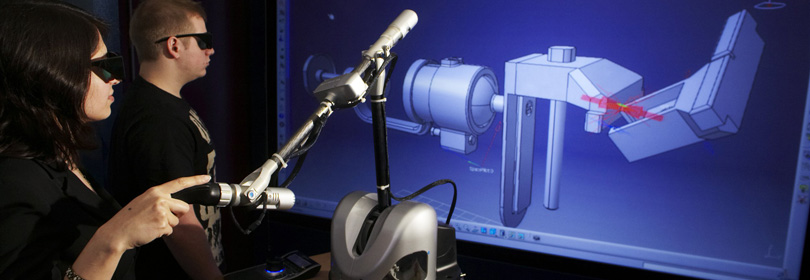
The Collaborative and Integrated Design research group aims to understand and model the interactions between all stakeholders involved in the design of manufactured products and/or associated services (field experts, users, citizens, etc.). It also aims to propose supports (based on cognitive and tangible representations), tools (integrated into the designers' environments), and methods (either integrated into the company's organization or accessible in an open-source format).
Members of the Collaborative and Integrated Design research group have historically developed research activities centered on the development of methods and tools for collaborative design that integrate both knowledge and stakeholders. Over time, thematic evolutions led the team to question the core foundation of its work, and the concept of interaction emerged as a common denominator for all its activities. Within this collaborative framework, the study of interactions encompasses human-human interactions, whether mediated or not by virtual or tangible artefacts, as well as human-machine interactions, including interactions with generative Artificial Intelligence agents.
The research studies often aim to support the ongoing transformations in society and companies towards reducing the environmental impacts of industry and empowering citizens to reclaim technologies. The integration of technologies, whether digital or not, is therefore accompanied by a critical analysis of their performance in relation to other criteria, such as those related to environmental or societal impacts.
We welcome PhD students from engineering, cognitive sciences, management sciences, or computer science, depending on the collaborative projects we develop with our partners.
Our ambition is to contribute to the field of design sciences in close connection with the humanities and social sciences (sociology of organizations, management, cognitive ergonomics, psychology) and information and communication sciences.
Research areas
The integration of technologies, whether digital or not, is accompanied by a critical analysis of their performance in relation to other criteria, such as those related to environmental impacts. We leverage design sciences to understand and model phenomena, as well as to develop supporting tools.
Complex interactions in digital design environments
- Immersive collaborative virtual environments for multidisciplinary design
- Experimental studies of new visualisation and interaction metaphors
- Cognitive approaches to mediated interactions in virtual environments
Design sciences to understand and support ongoing transformations in companies and society
- Product-service systems, servicization of offerings
- New forms of local, urban, and sustainable industrialization
Collaborative approaches towards reducing the environmental impacts of industry and empowering citizens to reclaim technologies
- Collaborative approaches within territories, in open collectives (innovation spaces, maker spaces...)
- Support for innovation incubators in developing countries
- Open-source approaches, study of citizen movements (repair cafés, low-tech approaches, maker spaces...)
Current Research Projects
PEPR
eNSEMBLE (2024-2027)
Redefining digital tools dedicated to collaboration by inventing mixed (physical and digital) spaces. G-SCOP is running two PhD theses on the influence of visual metaphors in co-design and on citizen platforms for territorial risk management.
PEPR
TRACCS: KNOW-HOW +4°C (2025-2030)
Studies the systemic adaptation strategies of territories (the Alps and Jura) facing +4°C of warming by 2100. The team contributes to the experimentation and dissemination of narrative methods for local public decision-making.
PEPR
Engineering Digital Twin (2026-2032)
Establishing the foundations of the next generation of digital twins. G-SCOP contributes to developing methods for adapting interactive systems to the tasks of diverse users throughout a digital twin's life cycle.
Europe GreenDeal
LAUDS Factories (2024-2027)
Towards small, versatile and local factories in urban settings, to co-create customised products in small batches. This project aims to develop a model to support LAUDS factories by building on maker spaces.
ANR • Equipex
CONTINUUM (2021-2029)
Creation of a collaborative infrastructure of 30 platforms across France for research between computer science and the humanities and social sciences. A high-performance visualisation network to observe and manipulate digital data through virtual/augmented experiences.
ANR • Joint Lab
MIMESIS'Lab (2024-2029)
Joint laboratory with SKYREAL. Aims to understand how humans represent design information, and to develop natural 3D human-machine interactions to improve human-centred systems architecting.
ANR • Project
ASEEC (2026-2027)
Integrating sufficiency principles into eco-design practices to influence the adoption of sustainable approaches. Aims to propose a training module to embed sufficiency into existing design tools.
ANR • Project
Satiable (2025-2026)
A participatory-science methodology addressing the challenges of technological innovation (energy sufficiency). Co-construction of desirable 2050 scenarios through foresight and citizen-empowerment workshops.
BPI • PIA
ACCEL 4.0
Development of innovative training and support schemes bringing together the industrial, academic and scientific ecosystem. Consortium including UIMM Ain, Grenoble INP, the AFPMA training centre and Carriat high school.
BPI • PIA
GAIA XR (2026-2029)
Building on MIMESIS'Lab, this project aims to develop an open collaborative platform for synchronising immersive worlds to exchange heterogeneous content across multi-platform environments.
Aeronautics
AIDEAS (2023-2026)
Joint project with IRT Saint-Exupéry to adapt generative conversational AI to systems-architecting activities by fine-tuning LLMs, and to define recommendations for engineer-AI interaction.
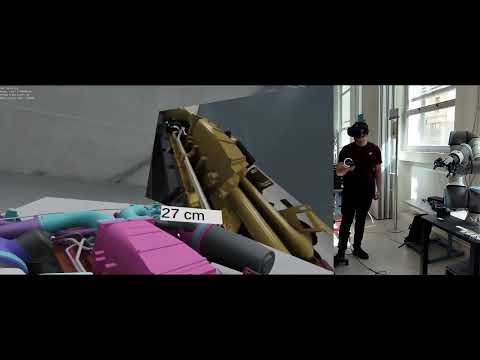
Advanced Visualisation & Interaction Platform




Notre réseau