


We define 3 levels of collaboration.
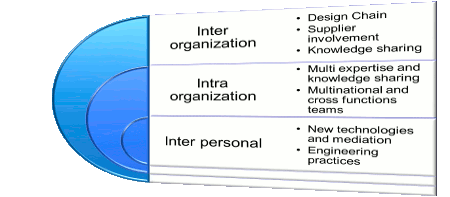
Interpersonal:
The interpersonal communication dimension is studied from the perspective of the objects and tools that frame the relationship between actors. We focus on two types of approaches:
-
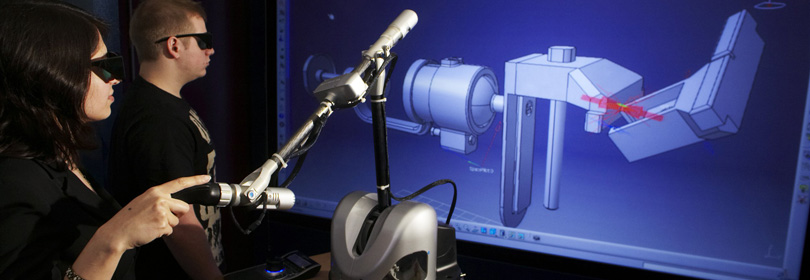
An approach concerning devices that facilitate interactions, leveraging the resources of the Mexico platform (augmented reality room) for these developments. Augmented reality tools have unexplored potential for fostering cooperation among designers.
-
An approach focusing on the study of collaborative practices, whether remote or in-person, particularly by mobilizing the experimental resources of the room
Intra-organization:
This level focuses specifically on studying the organizations that support collaboration, such as multi-expert and transnational teams. We focus on approaches centered on supporting communities of practice in their dynamic dimension of knowledge, in connection with research on knowledge management. Furthermore, we study new organizations emerging around open communities, as well as new issues related to the "bottom of the pyramid" or "lean design," among others.
Inter organization:
The inter-organizational level primarily deals with co-design issues involving suppliers. This topic is addressed from the perspective of methods and the development of collaborative processes, incorporating collaborative tools such as supplier portals and information systems.
Our research methods are drawn from several disciplinary fields and are mobilized depending on the level of investigation: many of our projects are carried out in collaboration with other disciplines. Thus, we distinguish several approaches:
- A "bottom-up" approach, which can be characterized as constructivist, based on fieldwork. We draw from ethno-methodological approaches or case studies.
- An "experimental" approach to observing designer activity, either in vitro in the laboratory or in vivo in the field when possible. Here, we specifically draw from cognitive sciences.
- An approach involving the development of demonstrators and usability tests, based on activity models. Here, we draw from systems engineering and computer science.
Tools and demonstrators allow us to test hypotheses and concepts derived from our field studies. This enables us to go beyond simply observing the state of the art to:
-
Model and prototype demonstrators
-
Study new usages (usability studies)
-
Develop methods
Our theoretical references are:
-
Design theory
-
Information theories
-
Activity theories
-
Complexity theory
-
Situated and distributed cognition
-
Ethno-methodology
Research team leader

About us
Partnerships
Productions
Resources
Events
- News
- Conferences
Keywords
Innovation
R&D
Multidisciplinarity
Cooperation
R&D
Multidisciplinarity
Cooperation